
-
Clover Cable Stitch Holders
Regular price $8.90Sale price $8.90 Regular price -
Clover Cable Stitch Holders U Shaped
Regular price $8.90Sale price $8.90 Regular price -
Birch Cable Needles Straight
Regular price $4.85Sale price $4.85 Regular price -
Clover Cable Stitch Holders U Shaped Jumbo
Regular price $8.90Sale price $8.90 Regular price -
NEW
Knitpro Symfonie 2 Cable Needle
Regular price $15.90Sale price $15.90 Regular price


Cable Needles for Knitting
Shop cable needles at Morris & Sons in Australia, including straight, U-shaped and wooden options from Birch, Clover and KnitPro. A cable needle temporarily holds stitches while you work them out of order to create knitted cables, braids and twists.
Whether you’re trying your first cable pattern or working a textured jumper, choose a style and size that suit your yarn and feel comfortable to use.
Cable Needle Styles in Our Collection
Our range includes Birch straight cable needles, Clover cable stitch holders in standard and U-shaped designs, Clover U-shaped jumbo holders and KnitPro Symfonie 2 wooden cable needles.
Straight cable needles offer a simple shape for holding stitches while you work a cable crossing. They’re an option if you prefer a tool without a deep bend.
U-shaped cable needles have a deeper curve where held stitches can sit while you work the next stitches. Explore Clover’s standard and jumbo U-shaped options, checking the product sizes against your project.
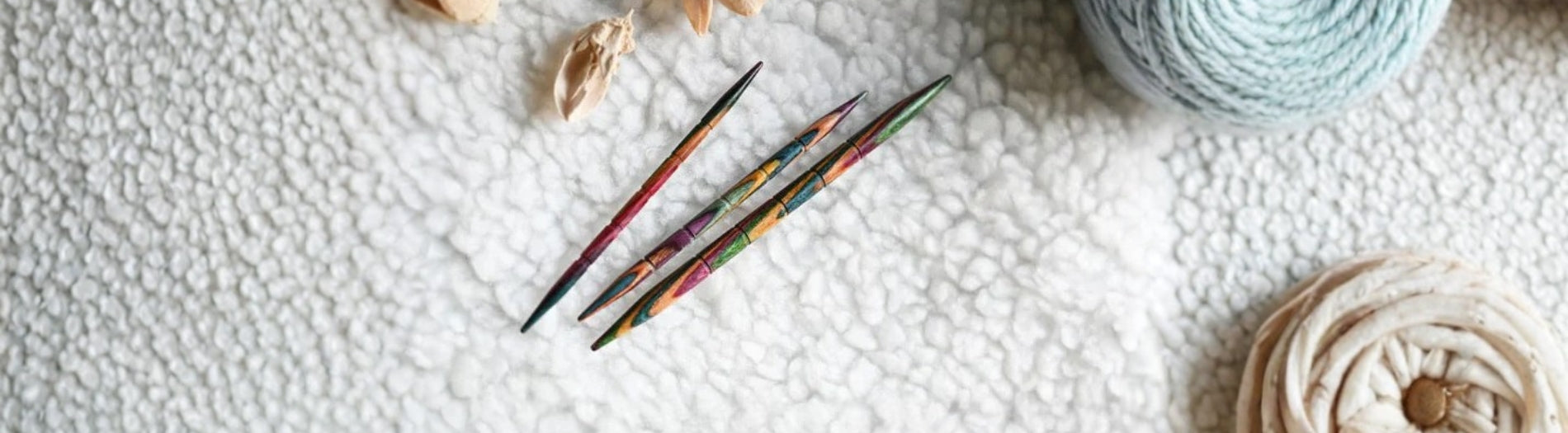
Wooden cable needles are worth considering if you prefer the feel of wood. The KnitPro Symfonie 2 set is made from polished laminated birchwood, with grooved shafts to help retain stitches and tapered tips for transferring them. It includes 3.25mm, 4mm and 5.5mm sizes.
How to Choose a Cable Needle
Start with your knitting needle size, then consider how easily your stitches slide and which shape you find easiest to handle.
-
Size: A cable needle the same diameter as, or slightly smaller than, your working needles is a useful starting point. Avoid one so large that you need to stretch the stitches over it.
-
Shape: Choose a straight style for a simple profile or a U-shaped style if you prefer held stitches to sit in a deeper bend.
-
Stitch retention: If stitches slide off easily, consider a U-shaped design or a grooved wooden needle.
-
Project needs: Check the sizes included in each product rather than relying on labels such as “standard” or “jumbo” alone.
Try your chosen cable needle on a small swatch before starting your project.
Using a Cable Needle
Follow your pattern to slip the required stitches onto the cable needle and hold them at the front or back of your work. Work the next stitches as directed, then work the held stitches in the order specified.
The position of the held stitches determines the direction of the cable crossing. Check your pattern’s abbreviation key, as cable instructions can vary.
Browse the collection to find cable needles for projects such as cabled scarves, hats, jumpers and blankets.
Frequently Asked Questions
What is a cable needle used for?
A cable needle temporarily holds a group of stitches while you work other stitches first. Changing the stitch order creates the crossings used in knitted cables, braids and twists.
What size cable needle do I need?
Choose a cable needle the same diameter as, or slightly smaller than, your working knitting needles as a starting point. It should hold the stitches comfortably without stretching them or allowing them to slip off too easily.
Are straight or U-shaped cable needles better?
Neither shape is best for everyone. Straight cable needles have a simple profile, while U-shaped needles provide a deeper bend for held stitches. Your preferred choice will depend on your yarn, tension and how you handle the tool.
Are cable stitch holders the same as cable needles?
Products labelled “cable stitch holders”, such as the Clover options in this collection, perform the same task as cable needles. General stitch holders are different: they usually keep stitches aside for longer periods, such as when working a neckline or sleeve.
Do I need a cable needle to knit cables?
Not always. Some knitters work cables without an extra needle, particularly for smaller crossings. A cable needle is a useful option when learning because it supports the held stitches while you follow the pattern.
Is a cable needle the same as a cable for circular knitting needles?
No. A cable needle is a small tool for holding stitches during cable crossings. A circular knitting needle cable is the flexible cord joining two needle tips.
Read less